

This is a translation of the original French text, which may contain errors; the French version is the reference text: Midterms 2026 : Donald Trump a perdu, mais le trumpisme est-il mort ?
An atlas of the 2026 midterm elections
On 3 November 2026, the Republicans lost the Senate, the House of Representatives and a majority of governorships, a defeat unmatched since 1974. In this atlas of more than 70 maps and charts, Sean Scull and William Thay analyse the vote race by race and district by district, show that it was a vote against Donald Trump’s record rather than an endorsement of the Democratic Party, and examine the future of Trumpism ahead of 2028.

The result
As of 13 November 2026, the Democrats hold 55 Senate seats and 256 House seats, as well as 30 of the 50 governorships, a majority they had not held since 2010.
The causes
Under-mobilisation of Trump voters, the return of Hispanics and 18-29-year-olds to the Democrats, and a rejection of the second term’s record: the Iran war, the cost of living, tariffs, the Epstein affair and ICE’s methods.
The outlook
The Democratic victory is not an endorsement of their project. Trumpism survives in its ideas, but the MAGA movement will have to choose between its America First line and its interventionist line before 2028.
Foreword
An electoral earthquake. The Democrats won a landslide in the midterm elections of 3 November 2026, against a backdrop of anger at the 47th President of the United States. The Republicans lost control of the House of Representatives and the Senate, and the Democrats regained a majority of governorships for the first time since 2010.
The beginning of post-Trumpism? For the authors, the defeat of the MAGA coalition, on the rise since 2016, forces it to contemplate life after Trump. The atlas seeks to understand why this defeat does not automatically mean the death of Trumpism as a political current, and what dynamics are taking shape for the 2028 presidential election.
A defeat of historic proportions
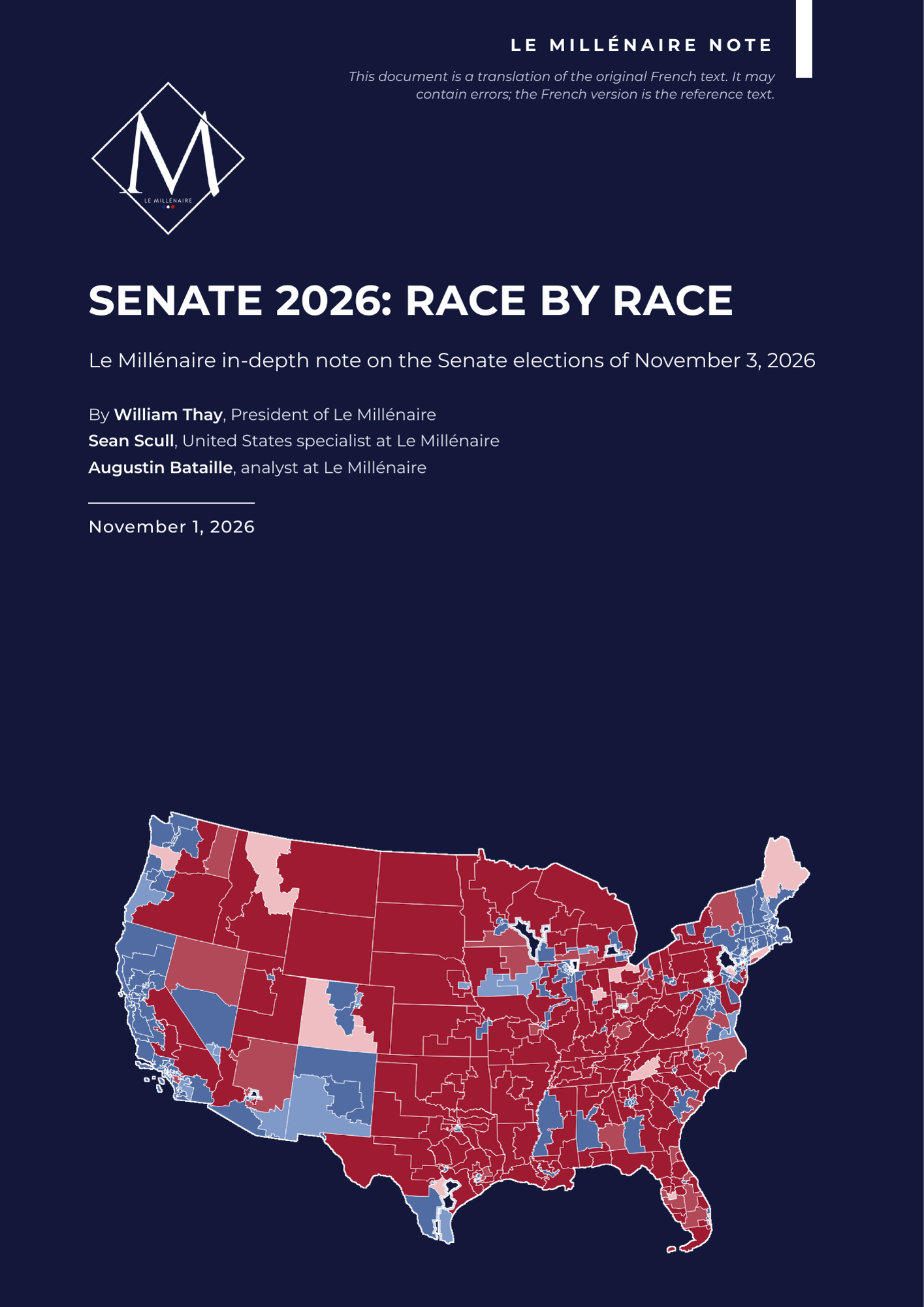
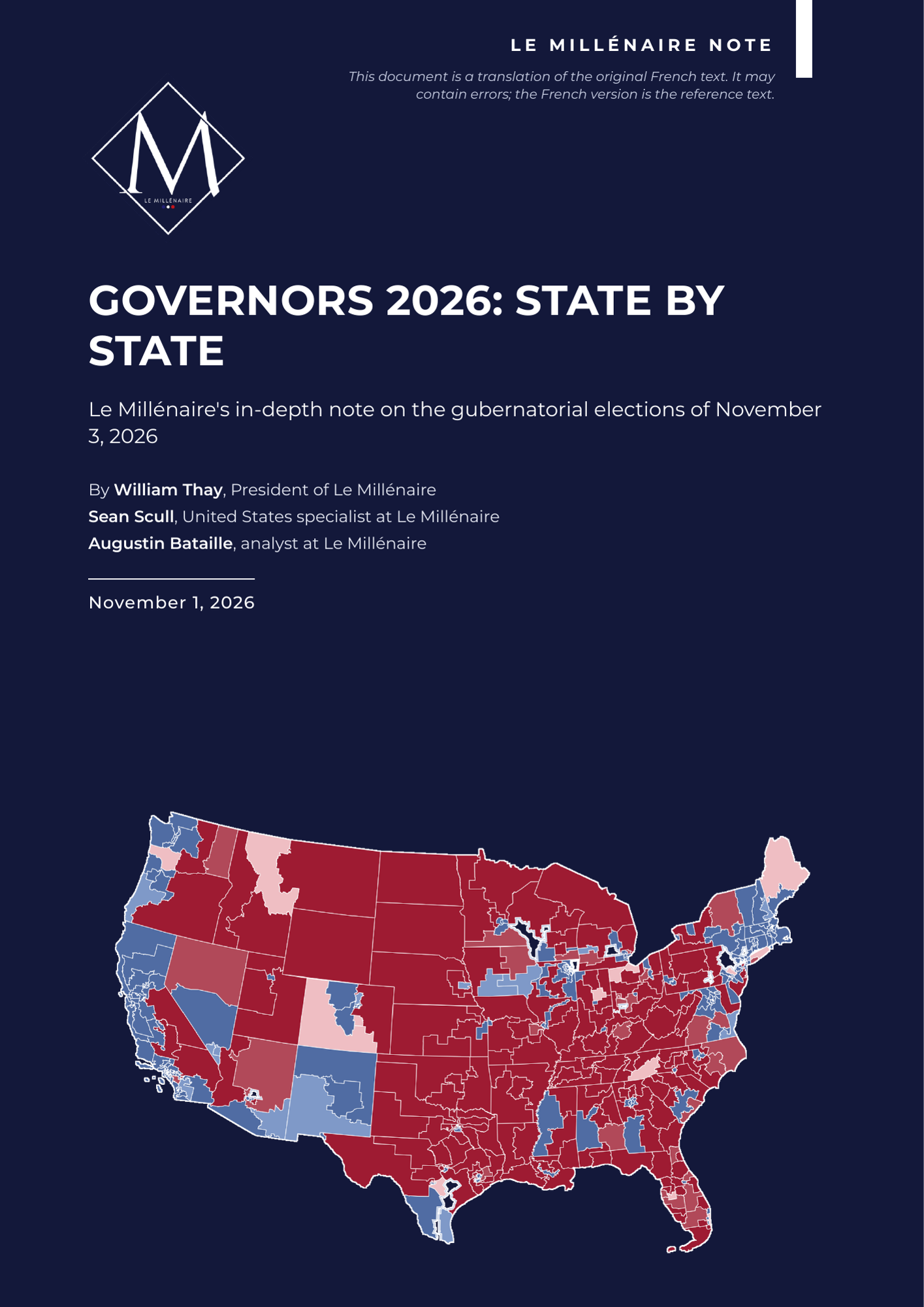
Unseen since 1974. The Republican Party had not suffered such a defeat since the 1974 elections, in the wake of Watergate. The Democrats took eight Senate seats from the Republicans: Texas, Ohio, Maine, North Carolina, South Carolina, Iowa, Kansas and Mississippi. Six governorships flipped from Republican to Democrat: Alaska, Nevada, Iowa, Ohio, Texas and Georgia.
A general swing. The swing reached 25.8 points in Texas, 22.3 points in South Carolina, 21.1 points in Kansas and 17.4 points in Iowa, states Donald Trump had carried by more than 10 points in 2024. The eve-of-election polls had underestimated the Democrats in almost every Senate race.
The Senate, race by race
Texas, symbol of the wave. James Talarico, a 37-year-old pastor elected on a centre-left populist platform, beat Ken Paxton by 12.1 points, becoming the first Democratic senator from Texas since 1988. 11% of Trump voters voted for him. Gina Hinojosa becomes the first Hispanic woman governor of Texas.
States thought unwinnable. Sherrod Brown retook Ohio, Annie Andrews beat Darline Graham in South Carolina, Adam Hamilton became Kansas’s first Democratic senator since 1932, Josh Turek won in Iowa and Scott Colom carried Mississippi by less than a point. Everywhere, the Iran war, fuel prices and tariffs weighed on Republican candidates.
Four seats held. Florida, Louisiana, Nebraska and Montana stayed Republican. Florida held out thanks to Ron DeSantis’s popularity, its reserves of conservative votes and the mobilisation of Republican voters.
swing in Texas between the 2024 presidential election and the 2026 Senate election: James Talarico becomes the first Democratic senator from Texas since 1988.
The House, district by district
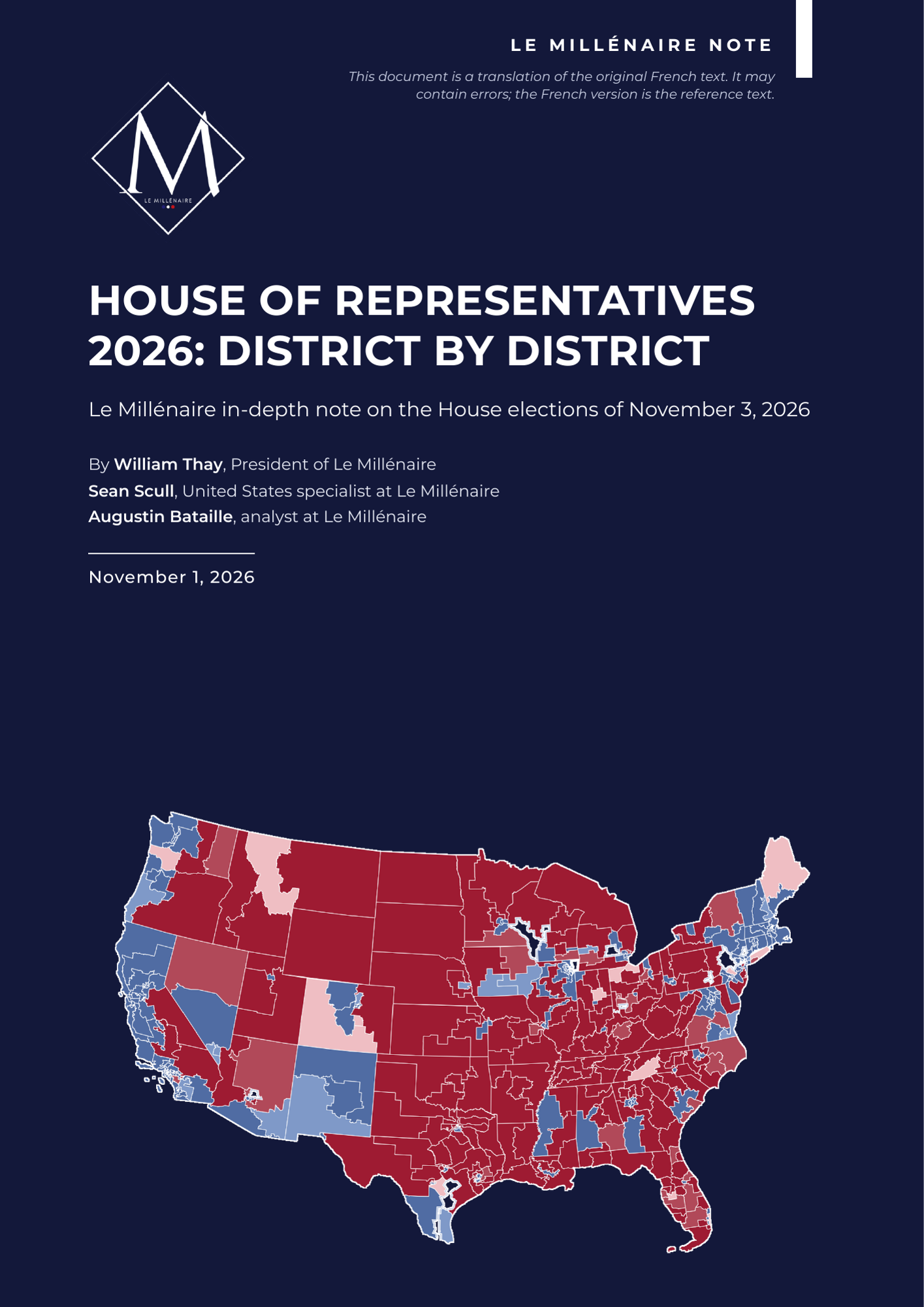
Dozens of seats change hands. Despite mid-decade redistricting, the Democrats won 11 of the 15 constituencies redrawn to favour the Republicans. As of 5 November, the atlas counted 32 seats changing hands, 31 to the Democrats and only one, TX-32, to the Republicans. As of 13 November, the Associated Press counts 45 seats taken from the Republicans by the Democrats.
The return of the Hispanic vote. The two biggest swings were in TX-15 (+42.7 points) and CA-22 (+34.7 points), districts that are 81% and 74% Hispanic. The average swing reached 23 points in Hispanic-majority districts, against roughly 12 to 14 points in other types of district.
Abstention rather than conversion. In 78 of the 112 districts made up mainly of whole counties, the Republican candidate kept less than 70% of the votes Trump won in 2024. Trump’s absence from the ballot, the usual low turnout in midterms and disappointment with the second term explain this under-mobilisation.
What the exit polls say
An electorate more Democratic than in 2024. According to the SSRS voter survey (79,541 interviews), 44% of 2026 voters had voted for Trump in 2024 and 49% for Kamala Harris. The Democrats won 70% of 2024 non-voters and 58% of independents.
A vote on Donald Trump. 63% of voters disapprove of his performance, 63% think the intervention in Iran was a bad decision, 66% believe tariffs have hurt the economy and 60% disapprove of ICE. The cost of living was crucial for 49% of voters, corruption for 55%.
Every group swung. Young people aged 18 to 29 swung 42 points towards the Democrats, who also gained 29 points among Hispanics and 14 points among white voters without a degree, the core of the MAGA movement.
Midterms 2026: the blue wave in figures
Swing towards the Democrats since the 2024 presidential election, Senate races, in points
Reading: in Texas, the Democratic margin went from -13.7 points in the 2024 presidential election to +12.1 points in the 2026 Senate election, a swing of 25.8 points.
Share of 2024 Trump voters who voted in 2026, in %
Reading: in Texas, 73% of 2024 Trump voters turned out in 2026, against 87% of Kamala Harris voters.
Opinions of 2026 voters, in %
Reading: 63% of 2026 voters disapprove of Donald Trump’s performance; 86% of them voted Democratic for the House.
House seats lost by the president’s party, heaviest defeats since 1938
Reading: in 2026, the president’s party would lose at least 40 House seats according to projections as of 5 November, a defeat comparable to 2018.
Conversion or abstention: what the counties say
Harris voters came back, Trump voters far less. In Texas, 87% of Harris voters turned out, against 73% of Trump voters. In North Carolina the gap was 77% against 64%, in South Carolina 85% against 71%.
The return of the Hispanic counties. The atlas follows nine counties with large Hispanic populations from 2016 to 2026, as well as party registration and early voting by party in twenty states. Democratic early voting rose markedly compared with 2022.
The reasons for the defeat
An America First promise not kept. More than a referendum on Donald Trump as a person, the vote sanctioned the record of his second term: the Iran war, threats against Europe, ambitions on Greenland, trade wars. The day after the election, 36% of Americans supported the Iran war.
Epstein, immigration and the economy. The partial release of the Epstein files, the violence of the deportation policy, which offended Hispanic opinion, and a cost of living that is not falling fed the disappointment. Despite 4% unemployment and a stock market up 39%, inflation reached 3.7% in November 2026 and a gallon of gasoline costs more than 4 dollars.
The result of the midterms must be read as a vote against Donald Trump and not in favour of the Democratic Party.
The Republican Party lost, but not Trump’s ideas
A campaign on the themes of 2024. The debates focused on the cost of living and criticism of interventionism, not on the Democrats’ favourite subjects. In Texas, James Talarico presented himself as a “border security democrat” opposed to forever wars.
Two lines within MAGA. The authors distinguish the nationalist America First line, which won Trump the elections of 2016 and 2024, from an interventionist line carried by former neoconservatives. By voting Democratic, some voters sought to save the former by sanctioning the latter.
Can the Democrats win the South for good?
Abstention and vote switching. In the Sun Belt, the Democratic victory combines lower turnout among Trump voters with vote switching of more than 10 points, except in Florida (5.2 points) and Kentucky (8.6 points).
A victory still to be consolidated. The South is not impervious to the Democratic vote, as 2006-2008 and Georgia in 2020 showed, but the collapse of 2010-2014 is a reminder that nothing is certain. The result reads first as a vote against Donald Trump, not as an endorsement of the Democratic Party.
Everything remains to be built. Between the rise of the left wing, led by Bernie Sanders and Alexandria Ocasio-Cortez, and profiles such as Gavin Newsom, Kamala Harris or Jon Ossoff, the Democrats still have to build a coalition able to win in 2028.
Can the Republicans recover in 2028?
An almost unbroken rule. The president’s party almost always loses the midterms, and the next presidential election remains open: Reagan, Clinton and Obama were re-elected after a midterm defeat.
Three profiles for after Trump. JD Vance can rely on the America First line and his rejection of the Iran war; Marco Rubio embodies the interventionist line; Ron DeSantis benefits from Florida’s resistance. For the authors, the candidate who prevails will be the one able to bring 18-29-year-olds back into the GOP fold.
Conclusion
The 2026 midterms are a defeat of historic proportions for the Republican Party, underestimated by the polls, which anticipated neither the under-mobilisation of its electorate nor the swing among Hispanics and young people. They reflect a rejection of the record of Donald Trump’s second term rather than enthusiasm for a Democratic project, and reshuffle the cards for 2028.
To explore the results state by state and district by district, see our interactive maps of the 2026 midterms (in French).
Midterms 2026: Donald Trump lost, but is Trumpism dead?
118 pages.
Scull S., Thay W., “Midterms 2026: Donald Trump lost, but is Trumpism dead?”, Le Millénaire Report, 6 November 2026, lemillenaire.org.
Browse the report
Sean Scull and William Thay
Geopolitical analyst and United States expert at Le Millénaire; President of Le Millénaire.
Sean Scull William ThayRequest an interview
For an interview with Sean Scull or William Thay about this report: presse@lemillenaire.org
Contact the press officeKeep our studies going
Your donations and memberships fund the next studies of Le Millénaire.
Support us JoinReceive the next studies of Le Millénaire
Read also
All studies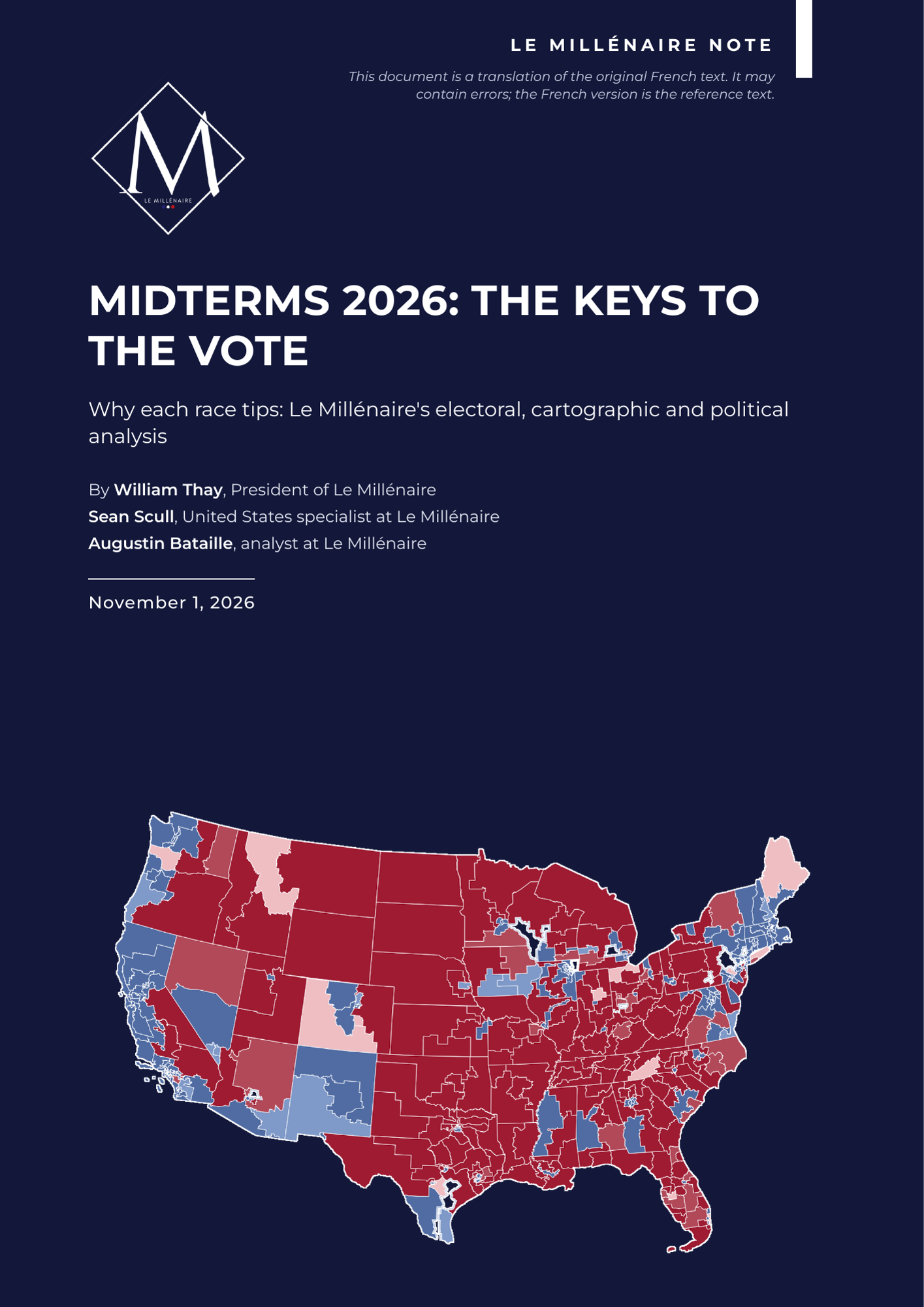 1 November 2026
 1 November 2026
 1 November 2026
 1 November 2026
Photo credit: Donald Trump in front of the White House, public domain.
